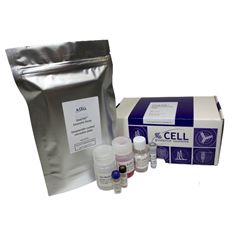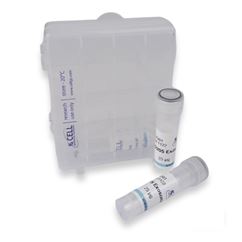
EVlution Cartridges


Product description
EVlution™ PES hollow fibre cartridges are designed for use with the EVlution™ TFF System, enabling high-yield concentration and purification of EVs, exosomes, proteins, and nucleic acids from up to 1 litre (94 cm2) or 3 litres (260 cm2) of starting material.
EVlution™ cartridges are available in 10 pore sizes ranging from 5 kDa to 1000 kDa; each cartridge uses precision polyethersulfone hollow fibre membranes to deliver consistent, reproducible results. Cartridges are reusable up to 20 times, making them a cost-effective choice for high-throughput research workflows.

| Product Details | |
|---|---|
| Cartridge area |
94 cm2 and 260 cm2 available |
| Processable volume |
Up to 1 litre (94 cm2) and up to 3 litre (260 cm2 ) |
| Filter material |
Polyethersulfone (PES) |
| Cartridge pore sizes |
Available sizes include 5, 8. 10, 30, 50, 100, 300, 500, 750, 1000 kDa. |
| Compatible tubing |
3 mm internal diameter |
| Storage temperature |
Room temperature |
Sample Type?
Hollow Fibre Filter Applications by Pore Size |
|||
| Pore Size (kDa) | Approx. Pore Diameter (nm) | Retained Molecules | Typical Applications |
| 1 | ~1 | Peptides, proteins, nucleic acids, EVs | Concentration of small peptides and proteins from dilute solutions |
| 3 | ~2 | Small proteins, nucleic acids, EVs | Concentration and purification of small proteins; buffer exchange |
| 5 | ~3 | Small proteins, nucleic acids, EVs | Protein concentration; removal of salts and small molecules |
| 8 | ~4 | Proteins, nucleic acids, EVs | Protein purification; diafiltration |
| 10 | ~5 | Proteins, cytokines, nucleic acids, EVs | Cytokine and growth factor concentration; buffer exchange |
| 30 | ~8 | Large proteins, antibody fragments, EVs | Antibody fragment purification; depletion of small proteins |
| 50 | ~12 | Albumin, large proteins, EVs | Albumin removal; large protein concentration |
| 100 | ~18 | Large protein complexes, EVs | Concentration of large protein complexes; pre-filtration for EV isolation |
| 300 | ~25 | EVs / Exosomes, large complexes | EV concentration and purification; FBS-EV depletion |
| 500 | ~45 | EVs / Exosomes, microvesicles | EV concentration and purification; FBS-EV depletion |
| 750 | ~65 | EVs, microvesicles, large particles | Microvesicle isolation; removal of smaller EVs and proteins |
| 1000 | ~100 | Large EVs, microvesicles, apoptotic bodies | Large particle concentration; apoptotic body isolation |
Most widely used pore sizes for EV concentration
Application Data
EV example data
As EV research scales up — from pilot experiments to functional studies, preclinical work, or process development — ultracentrifugation quickly becomes the bottleneck. It processes small volumes at a time, requires long sequential runs, and the repeated high gravitational forces can damage vesicle structure and introduce protein aggregates that compromise downstream analysis. For labs regularly working with conditioned media or biofluids at volumes above 50 ml, it simply doesn't hold up.
Tangential flow filtration takes a fundamentally different approach. Rather than forcing the entire sample through a membrane, TFF recirculates the sample parallel to the filter surface, continuously sweeping it clean and preventing fouling. This makes it possible to concentrate and diafilter large volumes in a single continuous run — removing free proteins and small molecules while keeping vesicles intact and in suspension throughout.
EVlution™ processes up to 1 litre of starting material in 90 minutes, generating a concentrated retentate of less than 10 ml via the Switch Flow™ system. Protein removal is confirmed by BCA assay, and EV recovery is tracked by NTA particle analysis — giving researchers measurable confidence in both purity and yield from each run.
EVlution™ is designed to integrate directly into a two-step workflow: TFF concentration and initial purification, followed by Exo-spin™ SEC columns for high-purity polishing. Together, the two systems cover the full range from large-volume conditioned media processing down to the final clean preparation needed for proteomics, RNA analysis, or functional assays
Sample to EV workflow

EV concentration and removal of contaminating proteins with EVlution


EVlution TFF significantly reduces the concentration of free proteins within a sample when concentrating cell culture media. 1000 mL of cancer cell conditioned media was processed at 1 bar in under 90 minutes to generate 20 ml of retentate. (A) Number of EV-sized particles determined by NTA. (b) Total amount of protein in input, permeate and retentate measured using a BCA assay.
Protein sample data

10 x Concentration of a 500 ml of a 1mg/ml BSA sample to 50 ml. Each concentration was performed three times under the same conditions
Reusing Cartridge for Protein Purifcation: Three Concentration and Cleaning Cycles on a 94 cm2 Cartridge
The dataset below was generated on our 94 cm2 hollow fibre cartridges. Each run was a 20-fold concentration of 500 ml of 1 mg/ml bovine serum albumin (BSA) in PBS down to approximately 25 ml. Between runs the cartridge was cleaned with 0.5 M NaOH at 40°C and 250 rpm for 40 minutes, followed by a further 20 minutes under the same conditions with 0.3 bar of back pressure applied to drive cleaning solution through the membrane wall.
Clean water permeability, in LMH per bar, was measured in triplicate at each stage. This is the single most informative measurement in TFF. It is made on buffer alone, so polarisation has been flushed away and what remains reflects only the intrinsic membrane resistance plus whatever material is genuinely bound to or deposited in it.
| Clean water permeability across three BSA concentration and cleaning cycles, 94 cm2 cartridge | |||||
| Stage | Repeat 1 | Repeat 2 | Repeat 3 | Mean (LMH/bar) | % of starting flux |
| Pre-run 1 | 124.2 | 125.3 | 124.8 | 124.8 | 100 |
| Post-run 1 | 65.9 | 70.2 | 64.6 | 66.9 | 54 |
| Post-clean 1 | 89.7 | 93.4 | 93.7 | 92.3 | 74 |
| Post-run 2 | 74.6 | 74.5 | 77.9 | 75.7 | 61 |
| Post-clean 2 | 93.0 | 93.9 | 93.9 | 93.6 | 75 |
| Post-run 3 | 67.3 | 62.1 | 68.7 | 66.0 | 53 |
| Post-clean 3 | 99.7 | 106.2 | 103.0 | 103.0 | 83 |
Figure: Clean water permeability as a percentage of the virgin cartridge value, across three BSA concentration runs with alkaline cleaning between each. Blue markers are clean-state measurements, red markers are post-run measurements.
For further discussion, please read our blog article