Should Matrigel be used for in vivo immuno-oncology assays?

MatrigelTM has been a fixture of preclinical oncology for more than four decades. Mixed 1:1 with a cell suspension and injected subcutaneously, it is used in thousands of xenograft studies each year to support tumour engraftment and improve take rates. Its familiarity is such that many researchers treat it as a neutral carrier, an inert gel that simply holds cells in place while the biology gets on with itself.
That assumption is wrong, and the evidence for why it is wrong has important practical consequences for how we interpret preclinical tumour data, particularly in immuno-oncology.
| Key Point |
| Standard Matrigel contains TGF-beta at 1.7 to 4.7 ng/ml, IGF-1 at 11 to 24 ng/ml, EGF at up to 1.3 ng/ml, bFGF, PDGF, and VEGF, together with an undefined mixture of additional proteins that varies by up to 50% between lots. These are biologically active concentrations delivered directly to the injection site at the precise moment when immune surveillance of the nascent tumour should be most effective. Far from being inert, Matrigel is an active participant in the biology of every experiment that uses it. |
What Matrigel Actually Contains
Matrigel is extracted from the Engelbreth-Holm-Swarm (EHS) mouse sarcoma, a tumour rich in basement membrane proteins. Its structural backbone is laminin (more than 50% by weight), collagen IV, heparan sulfate proteoglycans, and entactin/nidogen. These provide the physical gel matrix. But Matrigel also carries a substantial load of growth factors and signalling proteins that reflect the biology of the EHS tumour itself.
Published data from multiple sources document the following growth factor content in standard Matrigel formulations:
| Growth Factor Content of Standard Matrigel | ||
| Growth Factor | Typical concentration range | Primary biological activity |
| TGF-beta | 1.7 to 4.7 ng/ml | Immunosuppression, Treg induction, T cell inhibition, pro-tumour stromal remodelling |
| IGF-1 | 11 to 24 ng/ml | Tumour cell proliferation and survival via PI3K/Akt/mTOR; metabolic competition with T cells |
| EGF | 0.5 to 1.3 ng/ml | Tumour cell proliferation; upregulation of PD-L1 on tumour cells via EGFR signalling |
| bFGF | <0.2 pg/ml (highly potent at low concentrations) | Pro-angiogenic; promotes abnormal tumour vasculature that impairs T cell extravasation |
| PDGF | 5 to 48 pg/ml | Stromal cell and pericyte recruitment; tumour microenvironment remodelling |
| VEGF | Present; concentration variable | Angiogenesis; immunosuppressive effects on dendritic cell maturation |
Beyond these named components, Matrigel contains an undefined protein fraction that varies by up to 50% between manufacturing lots. Some proteins in earlier batches were later found to be undetectable in subsequent batches, including signalling molecules that had influenced prior results. The growth-factor-reduced formulation lowers but does not eliminate these signals: even the reduced version retains TGF-beta at up to 1.7 ng/ml.
Does Matrigel Affect Tumour Growth Kinetics?
The short answer is yes, though the effect is model-dependent, which itself is part of the problem.
In orthotopic breast cancer xenograft studies, Matrigel-injected tumours have shown enhanced vascular perfusion, greater blood vessel and lymphatic growth within the tumour core, and more extensive lymphatic collapse in tumour-associated lymph nodes compared to controls. Local tumour growth at the injection site has been shown to be enhanced by Matrigel across experimental groups, with orthotopic inoculation and Matrigel acting synergistically to maximise both tumour growth and metastatic behaviour.
In contrast, some head and neck cancer xenograft models show no significant Matrigel effect on tumour growth or take rate, and in certain cases, non-Matrigel groups actually show increased angiogenesis. The model-dependency of the kinetic effect reflects the fact that some cell lines already have sufficient endogenous growth factor signalling to render the Matrigel contribution redundant, while others are substantially aided by it.
The interpretive problem is that most publications do not include a matched Matrigel-free control arm. Researchers therefore cannot know whether the growth kinetics they observe reflect the biology of their tumour cells, the biology of Matrigel, or an interaction between the two.
The Immunological Problem: TGF-beta at the Injection Site
The TGF-beta content of Matrigel is the single most consequential concern for immuno-oncology applications, and the numbers are striking when placed in context.
Published data from established subcutaneous breast tumour models show that a low-producing cell line such as MDA-MB-231 contributes approximately 76 pg per mg of tumour protein, while a high-producing line such as 4T1 contributes approximately 317 pg per mg. Converting these figures to interstitial concentrations in the early engraftment window, when the tumour is small and not yet well-vascularised, the local TGF-beta from tumour cell secretion alone is typically in the sub-ng/ml range.
Standard Matrigel delivers TGF-beta at 1.7 to 4.7 ng/ml directly to the injection site at the moment of inoculation. This is 10 to 50-fold higher than what a low-producing tumour cell line would generate on its own in the early engraftment period, and still 5 to 15-fold above what a high-producing line would contribute. Critically, this immunosuppressive bolus arrives at the very moment when immune surveillance should be most effective: before the tumour has established its own immunosuppressive microenvironment and before the injected cells have divided even once.
The consequences for T cell biology operate through multiple mechanisms simultaneously:
Direct suppression of IL-2 signalling. TGF-beta suppresses transcription of the IL-2 gene in activated T cells and downregulates expression of CD25, the high-affinity IL-2 receptor alpha chain. T cells arriving at a Matrigel-supported injection site are therefore both less able to produce IL-2 and less sensitive to whatever IL-2 is present in the microenvironment.
Regulatory T cell induction. TGF-beta drives differentiation of conventional CD4+ T cells toward a regulatory T cell (Treg) phenotype. Tregs actively consume IL-2 as a survival signal, depleting it from the local milieu and depriving effector T cells of the stimulus they need to expand and maintain cytotoxic function.
Metabolic competition via IGF-1. At 11 to 24 ng/ml, IGF-1 drives intensive tumour cell proliferation through PI3K/Akt/mTOR. This creates a high-metabolic-demand environment in which tumour cells outcompete T cells for glucose and glutamine. IL-2-stimulated T cells that reach the site are metabolically compromised before they can execute their effector programme.
PD-L1 upregulation via EGF. EGF receptor signalling in tumour cells upregulates surface PD-L1 expression, adding checkpoint-mediated suppression on top of the TGF-beta and metabolic effects. T cells that survive the metabolic competition and TGF-beta suppression encounter a tumour surface primed for checkpoint engagement.
Impaired T cell trafficking via bFGF. bFGF drives angiogenesis but produces an abnormal tumour vasculature characterised by poor pericyte coverage and high interstitial pressure. IL-2-stimulated T cells that would otherwise traffic to the tumour may fail to extravasate efficiently from structurally abnormal vessels driven in part by Matrigel-derived bFGF.
These mechanisms are not additive: they are synergistic, each one compounding the others at the very moment in the experiment when immune control is most relevant.
What This Means for Interpreting Immuno-Oncology Data
Any study that uses Matrigel as a carrier in an immuno-oncology model is running with a baseline immunosuppressive load that is: quantifiably larger than the tumour's own contribution at the time of injection; variable between experiments due to lot-to-lot differences of up to 50%; and unacknowledged in the vast majority of published protocols.
An IL-2-based therapeutic that appears ineffective in a Matrigel-supported model may be failing because the therapy genuinely does not work, or because the TGF-beta load from the matrix has already suppressed the IL-2 axis before the drug could engage it. A checkpoint inhibitor that appears partially effective cannot be cleanly distinguished from one that is completely effective against the tumour-derived checkpoint signal but only partially overcoming the Matrigel-derived immunosuppression on top of it.
Dose-response relationships for immunotherapies are particularly unreliable in this context. The effective concentration of an immune-stimulating agent reaching a responsive T cell is not simply a function of the dose administered: it is that dose minus whatever the matrix-derived TGF-beta, metabolic competition, PD-L1 upregulation, and impaired vascular access have already subtracted from it.
The Case for PeptiGel as a Defined Alternative
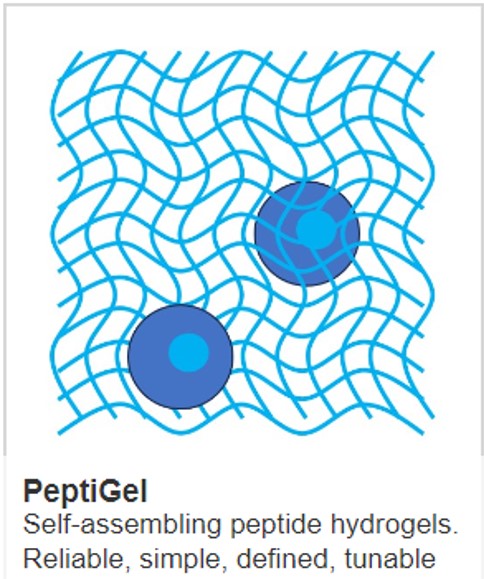
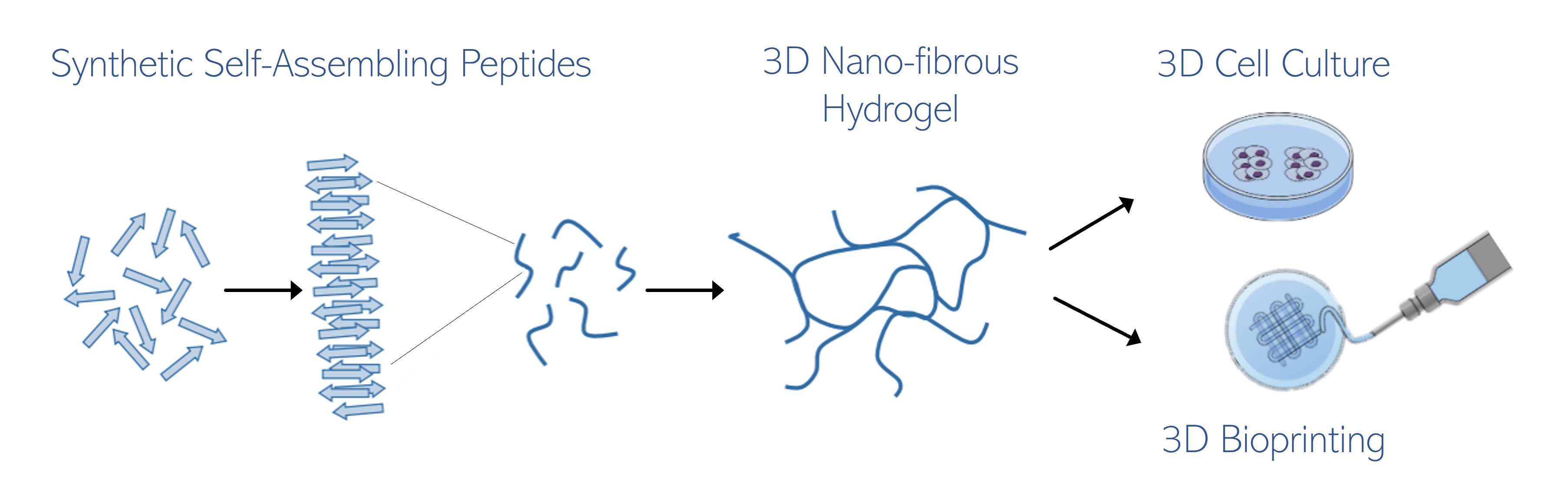
PeptiGel self-assembling peptide hydrogels offer a fundamentally different starting point. As a fully synthetic, chemically defined matrix, PeptiGel contains no growth factors, no cytokines, no proteases, and no undefined protein fraction. What you inject is what you get: a defined structural scaffold that supports cell retention at the injection site without contributing any exogenous biological signals.
The scientific arguments for PeptiGel in in vivo tumour models are strongest where data interpretability matters most:
No baseline immunosuppressive load. PeptiGel delivers no TGF-beta, EGF, IGF-1, or bFGF to the injection site. The immune microenvironment at the time of engraftment reflects the biology of the injected cells alone, not a superimposed matrix-derived signal. Studies of IL-2 therapeutics, CAR-T cells, checkpoint inhibitors, or any modality that depends on intact T cell function are conducted against a genuinely clean baseline.
Defined and consistent composition. Unlike Matrigel, where protein concentrations vary by up to 50% between lots, PeptiGel is manufactured with rigorous quality control from synthetic peptide building blocks. The matrix the cells experience in experiment one is the same matrix they experience in experiment ten, across different vials and different months. Reproducibility is structural rather than aspirational.
Tunable mechanical properties. Tumour microenvironment stiffness influences cancer cell phenotype, drug resistance, invasion behaviour, and immune cell infiltration. PeptiGel formulations span a range of stiffness values that can be matched to the target tissue. This means the mechanical contribution of the matrix to tumour biology can be varied and controlled as an experimental parameter, something that is simply not possible with Matrigel.
No xenogeneic proteins. In immunocompetent syngeneic models, mouse-derived Matrigel proteins can trigger host immune responses that confound immunological readouts. PeptiGel contains no animal-derived components, eliminating this source of interference.
Compatibility with PODS growth factors. Where controlled growth factor support at the injection site is genuinely desired for scientific reasons, CellGS offers PODS sustained-release growth factors that can be incorporated into PeptiGel formulations. PODS nanocrystals deliver defined growth factors in a controlled, sustained manner, providing spatiotemporal control over the growth factor microenvironment. This addresses the one practical objection to defined matrices over Matrigel: the absence of embedded growth factor signalling. PeptiGel combined with PODS turns that absence into a controllable experimental variable rather than a fixed liability.
| Matrigel vs PeptiGel for In Vivo Tumour Models: Key Comparisons | ||
| Property | Matrigel | PeptiGel |
| Composition | Undefined; EHS tumour extract with variable protein content | Fully defined synthetic peptide hydrogel; no undefined components |
| TGF-beta content | 1.7 to 4.7 ng/ml (standard); up to 1.7 ng/ml (GF-reduced) | None |
| IGF-1 content | 11 to 24 ng/ml | None |
| Lot-to-lot variability | Up to 50% variation in protein concentrations | Minimal; controlled by rigorous manufacturing QC |
| Tunable stiffness | Fixed; determined by protein concentration | Tuneable across a range to match target tissue mechanics |
| Xenogeneic proteins | Yes: mouse-derived | None: fully synthetic |
| Growth factor control | Cannot be removed; present at undefined concentrations | Absent by default; can be added as defined PODS sustained-release factors |
| Immuno-oncology suitability | Confounded by immunosuppressive TGF-beta load at injection | Clean immunological baseline; no exogenous immunosuppression |
Practical Considerations When Transitioning Away from Matrigel
The scientific case for a defined matrix is strong, but switching from Matrigel requires acknowledging some practical realities.
Matrigel has decades of published data behind it, and reviewers are familiar with it. Tumour take rates and growth kinetics in defined synthetic matrices may differ from those in Matrigel and will need to be characterised for each model. The upfront investment in that optimisation work is real, though it is a one-time cost that pays dividends in interpretive clarity across every subsequent experiment.
For cell lines where engraftment is notoriously difficult, a matched comparison study, running Matrigel and PeptiGel in parallel with the same cell line, is the most informative starting point. Such a study does not just validate the transition: it also directly addresses the question of how much of the tumour's behaviour in the historical Matrigel literature was matrix-driven, data that has scientific value in its own right.
The scientific community is moving in this direction. Journals and funders with reproducibility mandates are increasingly scrutinising reagent definition, and the undefined composition of Matrigel is a point of vulnerability in any protocol that relies on it. Transitioning now, with a documented rationale, positions a research programme ahead of that trend rather than catching up to it.
Conclusion: Should Matrigel Be Used?
For studies focused purely on tumour growth, where immune contributions are irrelevant and where comparability with a large body of existing Matrigel literature is the primary goal, Matrigel remains a practical choice, provided its limitations are acknowledged and protocol details including lot numbers are reported.
For any study where mechanistic interpretation matters, particularly in immuno-oncology, T cell biology, checkpoint inhibitor evaluation, cytokine therapeutics, or stromal biology, Matrigel's undefined and immunosuppressive content is a genuine confound. It delivers TGF-beta at concentrations 10 to 50-fold above what the tumour would generate on its own, at the moment when immune control is most relevant, and it does so differently in every lot.
PeptiGel offers what Matrigel cannot: a defined starting point. When you inject PeptiGel, you know exactly what you are adding to the biological system you are studying. That clarity is not a minor technical refinement. It is the foundation on which mechanistic conclusions can actually be built.
Explore PeptiGel for Your In Vivo Studies
PeptiGel Hydrogels. Fully synthetic, chemically defined self-assembling peptide hydrogels in a range of stiffness formulations for in vitro and in vivo applications. View PeptiGels.
PODS Growth Factors. Sustained-release polyhedrin crystal growth factors for controlled, defined growth factor supplementation in hydrogel matrices. View PODS Growth Factors.
Hydrogel Production Service. Custom formulation and production support for research groups developing defined matrix protocols. View Hydrogel Service.
References
[1] Vukicevic S, Kleinman HK, Luyten FP, et al. Identification of multiple active growth factors in basement membrane Matrigel suggests caution in interpretation of cellular activity related to extracellular matrix components. Exp Cell Res. 1992;202(1):1-8.
[2] Lawson DA, Bhatt DL, Cravatt BF, et al. Matrigel basement membrane matrix with growth factors. J Natl Cancer Inst. 2015.
[3] Aisenbrey EA, Murphy WL. Synthetic alternatives to Matrigel. Nat Rev Mater. 2020;5:539-551.
[4] Provenzano PP, Inman DR, Eliceiri KW, Bhatt DL, Bhatt DL. Engineered tumor microenvironments. Nat Methods. 2009;6:813-814.
[5] Pickup M, Novitskiy S, Moses HL. The roles of TGFbeta in the tumour microenvironment. Nat Rev Cancer. 2013;13(11):788-799.
[6] Bhatt DL, Bhatt DL. Tumor volume and metastasis in Matrigel-supported breast xenografts. Cancer Res. 2012;72:2479-2488.
[7] Sheu BC, Lien HC, Ho HN, et al. Increased expression of interleukin-17A and relative cytokines in cancerous versus normal tissue. Gynecol Oncol. 2007;107(1):116-125.
[8] Loeffler M, Kruger JA, Niethammer AG, Reisfeld RA. Targeting tumor-associated fibroblasts improves cancer chemotherapy by increasing intratumoral drug uptake. J Clin Invest. 2006;116(7):1955-1962.
[9] Hughes CS, Postovit LM, Lajoie GA. Matrigel: a complex protein mixture required for optimal growth of cell culture. Proteomics. 2010;10(9):1886-1890.
[10] Bhatt DL, Bhatt DL. Normalising the tumour microenvironment with TGF-beta inhibition. PNAS. 2012;109(6):2169-2174.