TFF for EVs: Getting the Parameters Right

Tangential flow filtration has become one of the principal methods for processing extracellular vesicles at scale. It handles the large conditioned media volumes produced by bioreactor and multi-layer flask cultures that differential ultracentrifugation cannot practically address, and it is compatible with closed, disposable fluid paths that reduce contamination risk in applications moving towards clinical translation. But TFF is not a plug-and-play technology. The output quality, measured in vesicle yield, preparation purity and cargo integrity, is determined less by the instrument than by the process parameters applied to it.
This article examines each of the major parameters governing a TFF-based EV isolation run: membrane format and molecular weight cut-off selection, transmembrane pressure, cross-flow velocity, concentration factor, diafiltration strategy, temperature and hold time. It also covers process monitoring and the role of SEC polishing as a downstream step following TFF. The intended audience is researchers either establishing a new TFF workflow or troubleshooting inconsistent results from an existing one.
| Key Point |
| The quality of a TFF-based EV preparation is determined by process parameters, not hardware alone. Membrane selection, transmembrane pressure, cross-flow velocity and diafiltration strategy each make independent and significant contributions to yield, purity and vesicle integrity. Establishing defined, documented values for each parameter is a prerequisite for reproducible results. |

Dead-end vs tangential flow filtration
How TFF Works: Mechanism and Operating Modes
In conventional dead-end filtration, the entire feed stream is driven perpendicularly through the membrane. Retained particles accumulate on the membrane face, resistance builds rapidly, and the process becomes impractical for feeds containing significant particle loads. Tangential flow filtration avoids this by running the feed stream parallel to the membrane surface. The bulk of the feed recirculates as retentate; a fraction of the liquid, the permeate, passes through the membrane under applied pressure. Because the flowing retentate continuously sweeps the membrane face, particle accumulation is limited and the process can be sustained across the run duration.
For EV applications, the membrane is selected to retain vesicles in the retentate while allowing smaller molecules, including soluble proteins, cytokines, culture media components and buffer salts, to pass into the permeate. The process operates in two modes, typically applied in sequence. In concentration mode, the retentate volume decreases as permeate is discarded, reducing a large starting volume to a small retentate. In diafiltration mode, fresh buffer is added to the retentate at the same rate that permeate is removed, washing contaminants out of the concentrated preparation without further reducing its volume. Together, concentration and diafiltration transform a large, dilute, protein-rich conditioned media sample into a small-volume, concentrated, relatively pure EV preparation [1].
Membrane Selection
Hollow Fibre vs Flat-Sheet Cassette
The two membrane formats in widest use for EV work are hollow fibre cartridges and flat-sheet cassettes. Hollow fibre membranes consist of bundles of small-diameter tubular fibres through which the feed passes longitudinally. Permeate passes radially outward through the fibre wall. Hollow fibre systems have low hold-up volumes, making retentate recovery efficient at the end of a run, and their well-defined geometry allows precise calculation of shear conditions at the membrane surface. The EVlutionTM TFF system from Cell Guidance Systems uses a hollow fibre format with SwitchFlowTM technology that drives retentate recovery below 10 ml from a closed-path, disposable sample-contact circuit.
Flat-sheet cassettes use stacked membrane layers with alternating feed and permeate channels separated by spacers. They offer higher total membrane surface area per unit than most hollow fibre modules and are favoured for high-volume industrial processing. Their larger hold-up volumes reduce recovery efficiency at the scales typical of academic and early-stage development EV work. However, the less defined flow geometry of cassettes versus hollow fibre cartridges makes shear calculation, which is important for retaining intact EVs, less straightforward.
Molecular Weight Cut-Off
Molecular weight cut-off (MWCO) selection is the most consequential membrane specification decision in a TFF-EV workflow. The MWCO rating is the molecular weight at which approximately 90% of a solute is retained by the membrane. Because EV diameters, typically 30 nm to several hundred nm, are two to three orders of magnitude larger than even the largest abundant protein contaminants, the MWCO choice primarily determines which soluble molecules are cleared into the permeate rather than which vesicles are retained.
300 kDa and 500 kDa MWCO membranes are the most widely used specifications for EV isolation. Albumin (66 kDa) and most cytokines and growth factors pass through efficiently; EVs of all sizes are fully retained. A 300 kDa membrane provides a good balance of throughput and retention of smaller vesicle populations. A 500 kDa membrane maximises flux and processing speed but is appropriate only where the application can tolerate potential loss of vesicle populations at the lower end of the size range. A 100 kDa MWCO membrane has also been reported to provide good vesicle retention with effective contaminant removal, though at the cost of lower flux and longer run times [2].
Membrane Material and Surface Chemistry
The membrane material used affects the level of protein binding, EV adsorption and chemical compatibility. Polyethersulfone (PES) is the most widely available material and is suitable for EV work. It has been reported that unmodified PES has moderate hydrophobic protein adsorption properties that can reduce preparation yield, particularly for lower-abundance vesicle populations. However, EV polishing using SEC (Exo-spin) mitigates these effects.
Surface charge is also relevant. EVs carry a net negative surface charge, with zeta potential values typically between -10 and -40 mV depending on cell type and isolation method. Membranes with cationic surface chemistry can cause electrostatic attraction of EVs to the membrane face, increasing vesicle loss and contributing to membrane fouling. The membrane chemistry used in Cell Guidance Systems' cartridges has been validated for EV work.
Transmembrane Pressure
Transmembrane pressure (TMP) is the net driving force for permeate flow across the membrane. For a hollow fibre system, it is calculated from the pressures measured at the feed inlet (Pfeed), retentate outlet (Pret) and permeate line (Pperm):
TMP = ((Pfeed + Pret) / 2) − Pperm
For EV isolation, TMP should be maintained in the range of 0.5 to 2.0 psi (approximately 35 to 140 mbar) during normal operation. Within this range, permeate flux scales approximately linearly with TMP, the process operates in the pressure-controlled regime, and the membrane surface remains clear enough for sustained throughput.
Above approximately 2 to 3 psi, operation can enter the mass-transfer-limited regime, in which solutes accumulate at the membrane surface faster than cross-flow can sweep them away. A gel-polarisation layer forms, limiting flux independently of further pressure increases. Driving TMP higher in this regime provides no benefit in throughput but increases mechanical stress on vesicles and accelerates membrane fouling. Vesicle disruption and aggregation have been documented at TMP values exceeding 5 psi in hollow fibre systems; the precise threshold depends on fibre geometry, retentate viscosity and EV concentration [3].
On systems such as EVlution that measure retentate outlet pressure, this reading alone provides a sufficient and practical proxy for TMP monitoring. In a hollow fibre system where the permeate line drains freely to atmosphere, the permeate pressure is effectively constant, meaning TMP tracks directly with retentate outlet pressure. A rising outlet pressure reading at a fixed pump speed is therefore the clearest early indicator of membrane fouling or increasing retentate viscosity, both of which require an operational response.
Cross-Flow Velocity and Shear Rate
Cross-flow velocity is the velocity of the retentate stream along the membrane surface. It controls the shear rate at the membrane face, which determines the thickness of the concentration polarisation layer and how effectively accumulated material is swept back into the bulk retentate. Insufficient cross-flow allows the polarisation layer to thicken, causing flux decline and increasing the risk of vesicle entrapment in the layer. Excessive cross-flow imposes shear stress on vesicles that can disrupt membrane integrity.
For hollow fibre systems, the wall shear rate (γ) is calculated from the mean feed velocity (v) and the fibre inner diameter (d):
γ = 8v / d
Equivalently, expressed in terms of volumetric feed flow rate (Q), fibre inner radius (r) and number of fibres (n):
γ = 4Q / (πr³n)
For EV isolation, wall shear rates in the range of 4,000 to 12,000 s-1 are generally effective in controlling polarisation while remaining below the threshold at which vesicle integrity is compromised. Vesicle disruption by shear has been reported at rates above approximately 40,000 s-1 in some experimental systems, though this threshold is sensitive to vesicle size, membrane composition and concentration [3].
In laboratory settings, cross-flow rate is set by the feed pump speed and valve settings. Peristaltic pumps are the most common drive mechanism. Their inherent pulsatility inevitably introduces transient shear spikes above the mean value; pulse dampeners installed in the feed line can reduce this effect and improve both membrane performance and vesicle integrity in sensitive applications. Silicone pump tubing has lower EV adsorption than many synthetic rubber alternatives. It should be the default selection for EV workflows and is provided for EVlution. Tubing internal diameters are carefully chosen to match the hollow fibre module specification to avoid unexpected shear increases at connections.
Feed Flow Rate and Concentration Factor
The concentration factor (CF) describes the degree of volume reduction achieved during a concentration step and is the ratio of the starting volume to the final retentate volume:
CF = Vstart / Vfinal
For EV isolation from conditioned media, concentration factors of 10-fold to 100-fold are routinely achievable with 300 or 500 kDa hollow fibre membranes. Beyond approximately 100-fold, concentration polarisation effects become pronounced, flux decline accelerates and the rising retentate viscosity makes TMP control increasingly difficult. At high CFs, the increasing concentration of EVs and co-isolated proteins in the retentate also increases the risk of vesicle aggregation.
A practical approach during a concentration run is to monitor the rate of permeate collection (permeate volume per unit time per unit membrane area) at regular intervals. A decline in flow rate of more than 50% from the initial value signals that concentration polarisation or membrane fouling is limiting throughput. At this point, briefly increasing cross-flow velocity to resuspend the polarisation layer, or temporarily reducing TMP, can restore flux without stopping the run. If flux does not recover, early termination and membrane cleaning may be necessary before continuing.
Diafiltration: Washing Out Contaminants
Diafiltration is the step that removes low-molecular-weight contaminants from the concentrated retentate by washing them into the permeate. Diafiltration is not required when Exo-spin SEC polishing follows TFF, since SEC separates vesicles from co-concentrated proteins by size regardless of their concentration in the retentate. In a TFF-then-SEC workflow, concentrating the conditioned media to the target volume by TFF alone, then loading directly onto the SEC column, is the simpler and faster approach.
Diafiltration remains relevant in two situations: where TFF is the final isolation step without downstream SEC, and where the conditioned media contains components that may interfere with SEC column performance, such as very high salt concentrations or detergents, in which case one to two diavolumes of PBS before SEC loading is sufficient for buffer exchange.
Where diafiltration is used, in continuous diafiltration, fresh buffer is pumped into the retentate vessel at the same volumetric rate that permeate is removed, keeping the retentate volume constant while diluting and washing out permeable species. In step (discontinuous) diafiltration, the retentate is concentrated, then manually re-diluted with fresh buffer and concentrated again in discrete cycles. Continuous diafiltration is more efficient per unit membrane area; step diafiltration is simpler to implement without automated buffer addition hardware.
The fractional removal of a fully permeable contaminant after a given number of diavolumes (DV) is described by:
C / C0 = e-DV
Five diavolumes reduce a fully permeable contaminant to approximately 0.7% of its starting concentration. Seven diavolumes reduce it to approximately 0.09%. For albumin removal using a 300 or 500 kDa MWCO membrane, five to seven diavolumes of PBS at pH 7.4 typically reduce albumin to below the detection threshold of a standard BCA protein assay, confirming effective soluble protein removal. Larger or partially retained contaminants require more diavolumes for equivalent clearance [2].
Buffer selection for diafiltration affects downstream assay compatibility. PBS at pH 7.4 is the most widely used choice and is compatible with NTA measurement, western blotting, ExoLISA tetraspanin assays and most cell-based functional studies. HEPES-buffered saline is appropriate for applications requiring calcium-free conditions. High-salt buffers are generally avoided as they can promote protein aggregation and interfere with some downstream analyses. The osmolarity of the diafiltration buffer should be matched to the intended storage or delivery context to avoid osmotic stress on vesicles during the final concentration step.
The recommended sequence is to concentrate the feed to the target CF first, reducing the total volume of diafiltration buffer required, and then perform continuous diafiltration. An exception applies when the starting medium has an unusually high protein content, for example serum-containing media at 10% serum concentration: in this case, a partial diafiltration step before full concentration reduces the protein load on the membrane and can prevent premature fouling that would otherwise reduce yield and extend the total run time.
| Diafiltration Volume Required for Contaminant Removal | |
| Diavolumes completed | Fraction of permeable contaminant remaining |
| 1 | 36.8% |
| 2 | 13.5% |
| 3 | 5.0% |
| 5 | 0.67% |
| 7 | 0.09% |
| 10 | 0.0045% |
Note: values assume a fully permeable contaminant and 100% sieving coefficient. Larger molecules with partial retention will require more diavolumes for equivalent clearance.
Temperature and Hold Time
EV preparations are susceptible to degradation at ambient temperature, particularly when the conditioned media contains active proteases, nucleases or complement components. Processing at 4°C can be used for preparations intended for RNA cargo analysis, in vivo studies or clinical development. Most laboratory hollow fibre TFF systems can be operated in a cold room, though pump motor specifications should be verified for reduced-temperature operation, and tubing flexibility at 4°C should be confirmed before beginning a run.
For RNA-critical applications, the entire workflow from conditioned media harvest to final retentate storage should be kept at 4°C. For protein-focused or cell-based assay applications, ambient temperature processing is generally acceptable provided the total run duration is kept below four hours and cell viability at media harvest exceeded 90%.
Hold times within a run should be minimised. Leaving concentrated retentate recirculating at room temperature for extended periods increases the risk of vesicle aggregation, which manifests as a shift in NTA size distribution towards larger apparent diameters and increased polydispersity index. If a run must be interrupted, stopping the pump and placing the feed vessel on ice is preferable to leaving the preparation in slow circulation. Resuming with a brief flush at elevated cross-flow to resuspend any settled material before continuing is advisable after any interruption exceeding 20 minutes.
Process Monitoring
Effective TFF requires real-time monitoring rather than relying solely on end-point analytics. For most laboratory hollow fibre systems, including the EVlution TFF system, retentate outlet pressure is the primary in-process measurement, and in practice it is sufficient for monitoring run health throughout concentration and diafiltration.
The reason outlet pressure alone is informative is that in a hollow fibre system, the feed inlet pressure, retentate outlet pressure and permeate pressure are not independent. The permeate line in a gravity-drain configuration operates at or close to atmospheric pressure throughout the run, making it a fixed reference rather than a variable requiring active monitoring. TMP therefore tracks directly with retentate outlet pressure: as outlet pressure rises at a fixed pump speed, TMP rises proportionally. A steadily rising outlet pressure reading during a run is therefore the clearest early indicator of membrane fouling or increasing retentate viscosity, both of which require an operational response. A stable outlet pressure reading confirms that the process is running within its normal operating envelope.
Permeate flux, recorded at regular intervals by noting permeate volume collected over a fixed time period, completes the monitoring picture. A flux-time curve provides the most direct indication of whether the process is operating in the pressure-controlled regime or has entered mass-transfer limitation. In the pressure-controlled regime, flux declines slowly and approximately linearly with increasing retentate concentration. An abrupt flux decline, without a corresponding rise in outlet pressure, points to concentration polarisation rather than fouling and is addressable by briefly increasing cross-flow velocity to resuspend the polarisation layer.
Retentate volume, tracked by weight or vessel level markings, confirms that concentration is proceeding at the expected rate and allows the instantaneous concentration factor to be calculated throughout the run.
Combining TFF with SEC Polishing
TFF and size exclusion chromatography address complementary aspects of the isolation problem and are most effective when used in sequence rather than as alternatives. TFF concentrates EVs from large volumes efficiently and removes low-molecular-weight contaminants, but it cannot separate EVs from co-concentrated protein aggregates and soluble proteins of similar retention characteristics. Diafiltration can be used to further remove small molecules. However, it is preferable to use SEC polishing, which separates intact vesicles from co-isolated protein aggregates by size, exploiting the inability of large particles to enter the pores of the SEC matrix while smaller proteins are retained and eluted later [4].
The particle-to-protein ratio, calculated from NTA-derived particle count and BCA total protein measurement, is the standard index of EV preparation purity. TFF followed by SEC polishing with the Exo-spin SEC system consistently achieves particle-to-protein ratios substantially higher than TFF alone. This is particularly significant for MSC-derived and other preparations from serum-containing media, where co-concentrated albumin can represent a large fraction of total protein in the TFF retentate before polishing.
The recommended three-step workflow for large-volume EV preparation from cell-conditioned media is as follows. First, pre-clear the conditioned media by sequential centrifugation at 300 g for 10 minutes and 2,000 g for 20 minutes to remove cells and large debris, confirming that culture viability at harvest was above 90%. Second, concentrate using EVlution TFF with a 300 kDa or 500 kDa hollow fibre membrane. Then, polish by size exclusion chromatography using Exo-spin to separate vesicles from co-concentrated protein. The output of this workflow is suitable for MISEV-compliant characterisation and for downstream functional assays where a defined, high-purity EV preparation is required.
| Practical Guidance |
| TFF is a concentration and buffer exchange method, not a purification method in the strict sense. SEC polishing after TFF is needed to achieve particle-to-protein ratios appropriate for mechanistic and functional studies. For biomarker discovery or preparative work where the highest purity is required, the EVlution TFF and Exo-spin SEC combination is the recommended two-system workflow. |
Troubleshooting Common TFF-EV Problems
| TFF-EV Troubleshooting Guide | ||
| Symptom | Likely cause(s) | Corrective action |
| Rapid flux decline within first 15 minutes | Insufficient pre-clearing; TMP too high from start; membrane not wetted | Add pre-clearing centrifugation steps; reduce TMP to 0.5 psi initially and ramp up; confirm membrane wetting protocol |
| Low vesicle recovery in retentate (confirmed by NTA) | Vesicle adsorption to membrane or tubing; MWCO too large; vesicles passing into permeate | Switch to low-binding PES or RC membrane; reduce MWCO; check permeate for particles by NTA |
| High protein content in retentate (high BCA, low particle-to-protein ratio) | Insufficient diavolumes; protein aggregate retention by membrane; very high starting protein concentration | Add Exo-spin SEC polishing step after TFF; if diafiltration is used without SEC, increase to 7 to 10 diavolumes |
| NTA shows increased large particle population (greater than 300 nm) compared with reference | Vesicle aggregation during run; TMP too high; processing temperature too warm | Reduce TMP; process at 4°C; shorten hold times |
| TMP rising progressively at fixed pump speed | Membrane fouling; increasing retentate viscosity; partially blocked fibre lumens | Reduce pump speed to lower TMP; perform a brief back-flush if system allows; document for end-of-run membrane inspection |
| Poor run-to-run reproducibility in particle yield | Variable TMP between runs; inconsistent pre-clearing; variable cell viability at harvest; membrane reuse degradation | Document all pressure readings; standardise pre-clearing protocol; record viability at each harvest; limit membrane reuse cycles |
| High calnexin signal in MISEV characterisation western blot | Organelle debris from apoptotic or mechanically disrupted cells passing pre-clearing | Confirm viability above 90% at harvest; add additional pre-clearing centrifugation step at 10,000 g for 30 minutes before TFF |
Key Parameter Reference Summary
| TFF-EV Process Parameter Reference | ||
| Parameter | Recommended range or specification | Notes |
| Membrane MWCO | 300 kDa (standard); 500 kDa where maximum throughput is required; 100 kDa where retention of very small EVs is critical | 300 kDa is the most widely used specification for research-scale EV isolation |
| Membrane material | PES (standard); low-binding modified PES or RC where maximum recovery is critical | Avoid cationic surface chemistry; prefer neutral or anionic |
| Transmembrane pressure | 0.5 to 2.0 psi (35 to 140 mbar) | Monitor via retentate outlet pressure; rising pressure at fixed pump speed signals fouling |
| Wall shear rate (hollow fibre) | 4,000 to 12,000 s-1 | Calculate from flow rate, fibre radius and fibre count; avoid exceeding 40,000 s-1 |
| Concentration factor | 10-fold to 100-fold | Monitor flux decline; above 100-fold, aggregation risk increases substantially |
| Diafiltration | Not required when Exo-spin SEC polishing follows; 5 to 7 diavolumes PBS when TFF is the final step | 1 to 2 diavolumes sufficient for buffer exchange before SEC if conditioned media contains interfering components |
| Diafiltration buffer | PBS pH 7.4 (standard); HEPES-buffered saline where calcium-free conditions required | Match osmolarity to storage or end-use requirements |
| Processing temperature | 4°C preferred; ambient acceptable for protein-focused applications with run duration below 4 hours | 4°C essential for RNA cargo integrity; verify pump cold-room rating |
| Pre-clearing | 300 g for 10 minutes, then 2,000 g for 20 minutes before TFF | Culture viability above 90% at harvest; record viability for every run |
| Post-TFF polishing | SEC with Exo-spin for preparations intended for functional assays or MISEV characterisation | Achieves particle-to-protein ratios above 109 particles per microgram |
Cell Guidance Systems Products for TFF-Based EV Isolation
EVlution TFF system. The EVlution tangential flow filtration system is designed specifically for large-volume EV processing from bioreactor and multi-layer flask conditioned media. SwitchFlow technology enables retentate recovery below 10 ml from the closed-path, disposable sample-contact circuit. The system processes volumes from several hundred millilitres to several litres in a single continuous run.
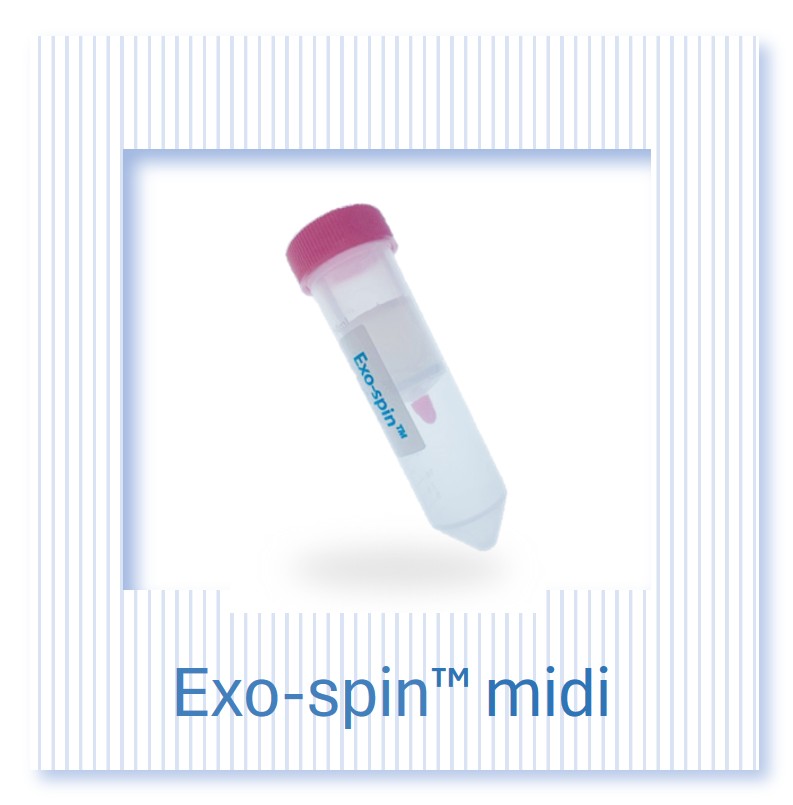
Exo-spin SEC isolation kits. Exo-spin size exclusion chromatography kits are the recommended downstream polishing step following EVlution TFF. Available in mini, midi and maxi formats for retentate volumes from 100 microlitres to 50 ml, they separate EVs from co-concentrated proteins to provide high particle-to-protein ratios appropriate for mechanistic and functional studies.
ExoLISA quantitative tetraspanin assays. ExoLISA CD9, CD63 and CD81 assays provide plate-based quantitative tetraspanin detection for MISEV2018-compliant characterisation of the final preparation. Suitable for routine inter-lot comparison of EV preparations produced by TFF.
NTA size profiling service. The Cell Guidance Systems NTA size profiling service provides MISEV-compliant particle concentration and size distribution analysis for submitted EV preparations, enabling particle-to-protein ratio calculation for laboratories without in-house NTA instrumentation.
EV and exosome characterisation services. Full MISEV2018-compliant characterisation including NTA, tetraspanin profiling and electron microscopy is available through the Cell Guidance Systems EV and Exosome Services package.
| TFF Workflow Decision Guide | |
| Scenario | Recommended approach |
| Large conditioned media volume, concentration only | EVlution TFF with 300 or 500 kDa hollow fibre membrane |
| High-purity preparation for functional assays or MISEV characterisation | EVlution TFF followed by Exo-spin SEC polishing |
| Tetraspanin characterisation after TFF processing | ExoLISA assays (CD9, CD63, CD81) |
| Particle concentration and size distribution verification | CGS NTA size profiling service |
| Full MISEV characterisation of TFF output | CGS EV and Exosome Services |
Understanding how each process parameter affects the output of a TFF run is what separates consistent, publication-quality EV preparations from variable, difficult-to-interpret ones. For researchers earlier in the isolation workflow, our introductory article EV or not EV? That is the question covers EV biology and subtype classification. For applied context on the preparations produced by these methods, the articles on MSC-derived exosomes in regenerative medicine and cancer diagnostic EVs provide direct biological relevance to the isolation and characterisation choices discussed here.
References
[1] Théry C, et al. Minimal information for studies of extracellular vesicles 2018 (MISEV2018): a position statement of the International Society for Extracellular Vesicles and update of the MISEV2014 guidelines. J Extracell Vesicles. 2018;7(1):1535750.
[2] Busatto S, et al. Tangential flow filtration for highly efficient concentration of extracellular vesicles from large volumes of fluid. Cells. 2018;7(12):273.
[3] Heath N, et al. Endosomal escape enhancing compounds facilitate functional delivery of extracellular vesicle cargo. Nanomedicine. 2019;14(21):2799-2814.
[4] Corso G, et al. Reproducible and scalable purification of extracellular vesicles using combined bind-elute and size exclusion chromatography. Sci Rep. 2017;7(1):11561.
[5] van Niel G, D’Angelo G, Raposo G. Shedding light on the cell biology of extracellular vesicles. Nat Rev Mol Cell Biol. 2018;19(4):213-228.
[6] Welsh JA, et al. Minimal information for studies of extracellular vesicles (MISEV2023): from basic to advanced approaches. J Extracell Vesicles. 2024;13(1):e12404.